
Hathway Healing on the Farm


Related Event

Most of a life, whether short or long, is a cycle of breaking and mending. Bones, hearts, even promises snap and heal, snap and heal, in a brutal, beautiful, endless cycle. Until, of course, there is an end.
There came a point in my father’s long illness when he could no longer heal. We had seen this before in animals on our farm: goats whose knees would no longer bend, old roosters who turned their shrunken combs away from the watering can. With livestock, the signs are easy to recognize, and our responsibility is simple mercy. The relief of their suffering is a quick end. With humans, it’s more complicated. At just 68, Dad’s body was infirm, ravaged by decades of abuse and illness, finally a casualty of the relentless degradation of time. When he was diagnosed with the terminal disease that would kill him, he was given five years, and as he passed the four and a half year mark, we understood that in his final months, his health would only decline. As his daughter, I felt that my responsibility was to provide him with wholehearted care, but we both knew that he would not get better.
For me, those last months were both a gift and a burden, the privilege of shepherding his life to a quiet close was weighed by the endless juggling of logistics, emotions, and finances. The kids were late to school, bills went unpaid, and I spent hours crying in hidden corners of our farmhouse, sobbing into the pantry door and the stacked logs of the woodpile. As Dad’s range of motion constricted to one room, I would sit on the stairs just beyond his door, silently weeping beneath a wedding picture of my parents as I listened to him murmur and periodically sigh. His resignation to mortality was almost theatrical; I carry the sound in my ears even now, almost five years later. And then he died, gently, in the still blue morning after Christmas.
With Dad’s last ragged breath, my role underwent a seismic shift. Just twenty-four hours before, I had been at his beck and call, whisking eggs for the Yorkshire pudding he craved and helping him wipe his bottom at the mobile commode that we’d parked in my front room window. Eighteen hours earlier I had smoothed the fine white hair on his sunken temple, and plumped the pillows under his swollen left foot. Twelve hours ago, I had squeezed a syringe of morphine into his cheek, bypassing the stumps of teeth that had become so brittle in recent months that they’d snapped, and recording the time and dosage on the kitchen white board. At midnight, I’d taken a quick, fitful nap, interrupted by anxiety and adrenaline. And then a blur of handholding, racking sobs, the final exhale. In an instant, I morphed from nurse to mourner. I had been the caregiver, and now I was the one in need of healing.
The physical pain of loss surprised me: Grief hurts. My heart felt bruised and squeezed in my chest, the pain sometimes sharpening to a pulsing barb. Each breath caught in my throat, an echo of Dad’s last. I was overwhelmed by emotion; my voice broke and tears flowed without warning. I frequently lost my train of thought. In the previous years I had acquired surface medical knowledge about drug interactions and treatment options, and had spent much of my energy tracking appointments and prescriptions. With Dad’s death, all of this information—so specific to his case, so far outside any knowledge I would need again—became useless. My mind, which had spent the past several years in perpetual coordination, was spinning and unfocused, newly emptied.
And I was sad, so sad.
In grief, with all the tears, all the water shed, it’s instinctive to use aquatic metaphors to describe your feelings. You feel underwater, as though you’re drowning, unable to come up for air. You don’t dare to aspire to buoyant, bobbing cheer. Instead, you frame relief as a simple return to neutral buoyancy, a term used in scuba diving to describe the state where you’re neither sinking nor floating. Under the crush of feelings, you search for weightlessness, equilibrium, or some sort of balance.
I knew about neutral buoyancy because my dad had given me scuba lessons for my thirty fourth birthday, a fatherly nudge to get me to take a break from the farm. He had tucked a check into a card that still sat on top of my dresser, a makeshift coaster for my coffee cup. Inside, he’d scrawled “Be careful with that SCUBA business. Much love, Pops.”
As I mourned him, the little scraps, the fragments of life, felt suddenly disintegrated. There were pieces of Dad littered around my house: half a roll of Lifesavers in a coat pocket, bifocals folded on top of the piano, inconsequential notes that took on the importance of relics, bits scattered across our lives.
The word heal comes from the same root as the word whole. When Dad was alive, he teased us that our life—the homestead that my husband, Karl, and I had created, our succession of daughters, our dairy goats and chickens and sheep and ducks, the cheerful work of our partnership—was “disgustingly wholesome.” He said it with an affectionate chuckle, not really disgusted, just a little incredulous, more so because as we wrapped him into our fold, he enjoyed it. This was not a lifestyle that he would have chosen as a younger man, but in his final years, Dad retired and lived in a house on the edge of our woods. He picked blueberries with his granddaughters, reluctantly dug potatoes in the garden, bottle-fed baby goats in our kitchen, and took charge of roasting the Thanksgiving turkey we’d raised. In his absence, after several years of integrating him into our space, we were missing a piece; Dad had become a part of our world, and his subtraction minimized the sum of our whole. If you heal by restoring wholeness, what do you do when a part of the whole is irretrievably gone?
In the first months after my dad’s death, I thought about him all the time, and his absence became as real as his presence had been. I expected him to be at the wheel of every white sedan that passed our house, or to wander into my kitchen, a jolly retired professor quoting poetry, making self-deprecating jokes and rhapsodizing about whatever he’d recently made for dinner. There were moments when I was genuinely surprised that he wasn’t there. Once, two months after he died, I dialed his number to ask for the recipe for his corned beef glaze, and was startled when a recorded voice said the line had been disconnected.
In the confusion of grief, a need to remember swirls together with a desire to heal. At the same time that I tried to retain every detail of Dad’s life with us, I craved relief from the weight of those memories. I was impatient for a time when our family would feel whole again, but the thought of moving on also gave me horrible guilt; as Dad’s only child, I saw myself as the guardian of his memory. Anything I forgot would be gone forever. In this role, I felt a responsibility to hold grief closely, and to nurse the jagged edges of the empty spot he’d left.
This tension between remembering and forgetting was exhausting. The most painful memories were the most present, but I wanted my father’s legacy to be a collection of his best moments, his greatest hits. I missed him, though really what I missed was an idealized version of Dad’s best self, not the dwindling specter he’d become in his last months. Replaying scenes from his life, my clearest memories were of Dad as he was at the end: needy, the “poor, bare, forked animal” of King Lear’s lament. I wondered, though, if I should willfully forget that. Instead, should I try to remember him as the vibrant English professor who could quote the rest of Shakespeare’s line, and its exact act and scene? The hurt stayed fresh as I tried to figure out how—who—to remember.
And still the world crept on at its petty pace: class trips required drivers, the furnace needed a new heating coil, strangers cut in line at the grocery store, oblivious to my raw emotions. I raged inwardly at platitudes and tepid condolence; accepting them felt like a betrayal, and though I was publicly polite, I was privately stubborn in my refusal. Time passed, but I wasn’t ready to heal.
One generation passes away, and another generation comes: but the earth abides forever. My father was not a religious man, but after he died I found this passage from Ecclesiastes marked in a Bible on his office shelf. Whether Dad was comforting himself or leaving me a clue to moving beyond my own sadness, I’ll never know, but as the seasons turned, I found an easing of grief in the rhythm of our farm.
The cycle is part of the comfort: It’s the same every year. The spring begins tentatively, the ground still covered with heavy snow. Karl goes out to the maples that ring our pasture. On each tree, little circles scar the bark where we’ve tapped the trees in previous springs, freshly filled holes in the wood giving us a visual reminder that nature tends to healing. Karl finds a new spot and uses a drill bit to twist wet pulp out of their trunks. Then the metal taps are hammered, gently, into the trees, and tapered aluminum buckets are hung from tiny metal hooks below. The sap starts its steady drip, and for the next few weeks, the house is humid and smells of sugar.
Next, seed cups, hundreds of them, are arranged on makeshift tables in front of an east-facing picture window. In December, my dad’s hospital bed had occupied the same space, but now, on sawhorses covered with old doors we’ve scavenged from the attic, squash and tomatoes and ruffly kale are unfurling their verdant leaves. The smell of maple syrup is replaced by damp soil and wood smoke from the stove that keeps the seedlings warm. It wafts through the house and up the stairs, bringing us dreams of the waking spring earth.
In the barn, we have set up a baby monitor to catch snatches of bleats and the occasional nighttime cluck as we wait for the first goat kids. Expectant does lean against their hay feeders, eyes soft and the girth of their bellies impossibly stretched. Their backs begin to sag as their ligaments soften for labor. By the time the babies are born—nine in that first spring after Dad’s death—new chicks have already arrived from the hatchery, and the door between our house and the attached barn is just a suggestion: there are more animals inside than out.
If my dad had passed during the glorious renaissance of spring, grief might have been made harder by the disjunction between my mood and that of the earth. Alternatively, it might have been softened by the ebullience of the natural world. As it was, he died in the darkest time of the year, just days after the winter solstice. The season encouraged my mood: cold, leaden, curling inward. But each day that I grieved, the earth moved a little closer to the balance of the vernal equinox. The days elongated by seconds, but still held a glimmer of more light as the weeks and months marched on. The annual rebirth of spring brought the bustling chaos of new life back to our farm, and with it came mindful work.
The shift from hurt to health was almost imperceptible, like the extra sunlight bringing the earth into spring balance. I don’t know when it happened, but it did. One day, I simply felt better. I was able to think of my father’s life in its entirety, to feel gratitude for my place in it, and to celebrate the fullness of Dad’s memory. At his birthday, the first June after his death, we held a memorial that we called “The Festival of Steve.” On a sunny summer afternoon, we listened to the Motown playlist from his iPod and ate Dad’s favorite foods—baba ganoush, lemon stilton cheese, chocolate cake with white frosting—as friends from his childhood mingled with people he’d met at the library in our small town. We all sat under a spreading maple as someone read aloud from his first published short story, and eventually a few kids began to play touch football. It was a tribute completely in Dad’s spirit; he would have loved it.
In these years since my father died, I have found that I think less of loss and more of gratitude. The pain of his absence has healed, filled in from the center like the bark of one of our tapped maples. Replete, I am able to think gratefully on the time we had, the care I was able to give, and the questions his death forced me to ask. A teacher in life, Dad was also a teacher in death.
After the rawness of grief, emotional healing comes from embracing what we have: family, the ability to work, the daily beauty of existence. In health, each day is a gift. Remembering is part of it. The many bits of life—preferences, conversations, meticulously darned socks—these integrate to make us human. But it is the memories, mellowing as they age, that make us whole.
About
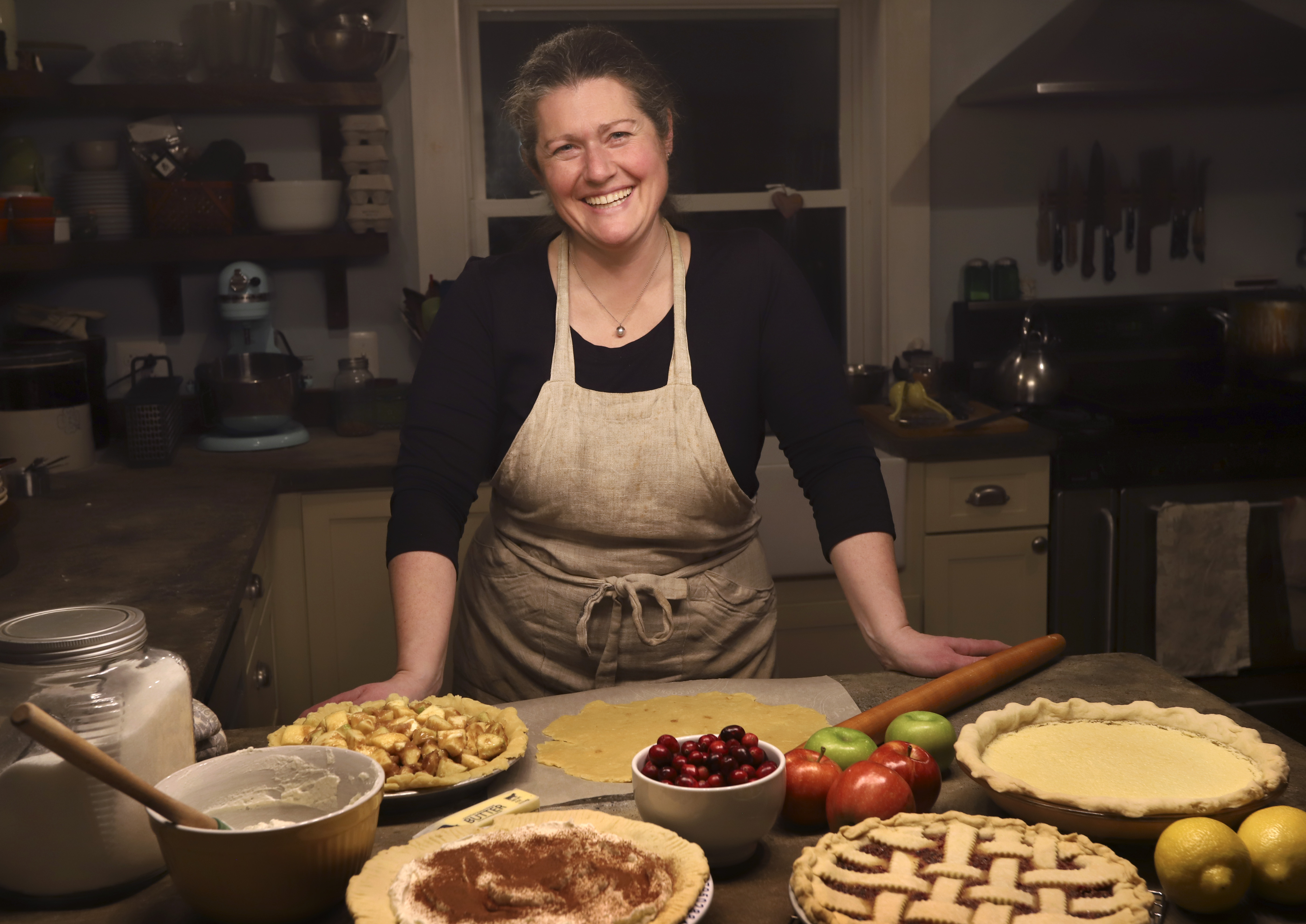
Margaret Hathaway is a writer, farmer, and mother of three, based in Southern Maine. She has worked in book publishing, communications, and, early in her career, as a manager of New York's original Magnolia Bakery. She is the author of seven books on food and farming, including the memoir, The Year of the Goat, and two volumes of the Maine Community Cookbooks. In 2023, Margaret and her husband and collaborator, Karl Schatz, started Community Plate, a Maine-based nonprofit dedicated to fostering connection and creating community through shared meals and stories. Community Plate's work has received national attention, and has been featured on NPR's Weekend Edition with Scott Simon, the NBC Nightly News, and on the TODAY Show. Margaret and Karl live with their family on Ten Apple Farm, a diversified homestead, where they tend dairy goats, assorted poultry, a large garden, and a small orchard.
Related Event
